


Kawasaki disease can affect the heart by causing:
- Coronary artery aneurysms
- Leakage of valves
- Accumulation of fluid around the heart (called pericardial effusion).
The most serious of these complications are the coronary artery aneurysms. The coronary arteries are the blood vessels that take oxygen rich blood to the heart muscle. An aneurysm is an area of a blood vessel that has become bulging When an artery is dilated (wider than normal), the blood flows through it more slowly because it is at a lower pressure. This change in pressure and speed makes it easier for blood clots to form which can lead to heart attacks, in this incidence children might complain of chest pain is it important to call 999.
How do you know if you child has Kawasaki disease?
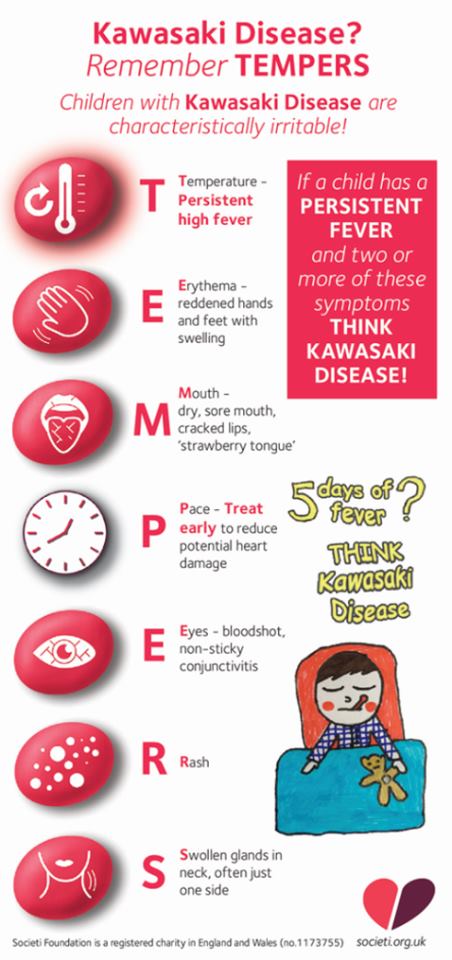
There is no definite test that can be done to find out if a child has Kawasaki disease. However, there are a number of symptoms that help doctors to diagnose this disease:
- A fever that lasts more than 4/5 days
- Red eyes or conjunctivitis (not sticky)
- A rash anywhere on the body
- Red, cracked, dry lips
- A swollen tongue with white coating and red lumps (strawberry tongue)
- Swollen neck (lymph) glands
- Red swollen fingers and toes (the skin in these areas may peel at a later date)
- Irritable, miserable behaviour
- Painful joints
How is Kawasaki disease treated?
Children with Kawasaki disease are normally given an infusion of antibodies (immunoglobulin) and high doses of aspirin. When the raised temperature and acute illness have settled, the child will be sent home on a low dose of aspirin. This will continue for about six weeks or until the cardiologist is happy that the heart has not been damaged by the disease.
How could a child be affected by Kawasaki disease?
Most children will make a full recovery from Kawasaki disease and will not need any special treatment. Children with heart complications should also make a good recovery once they have received treatment, although they may need to be monitored for some time to check there have been no further complications.